Recent Posts
about technology, development, gaming and whatever comes to my mind.
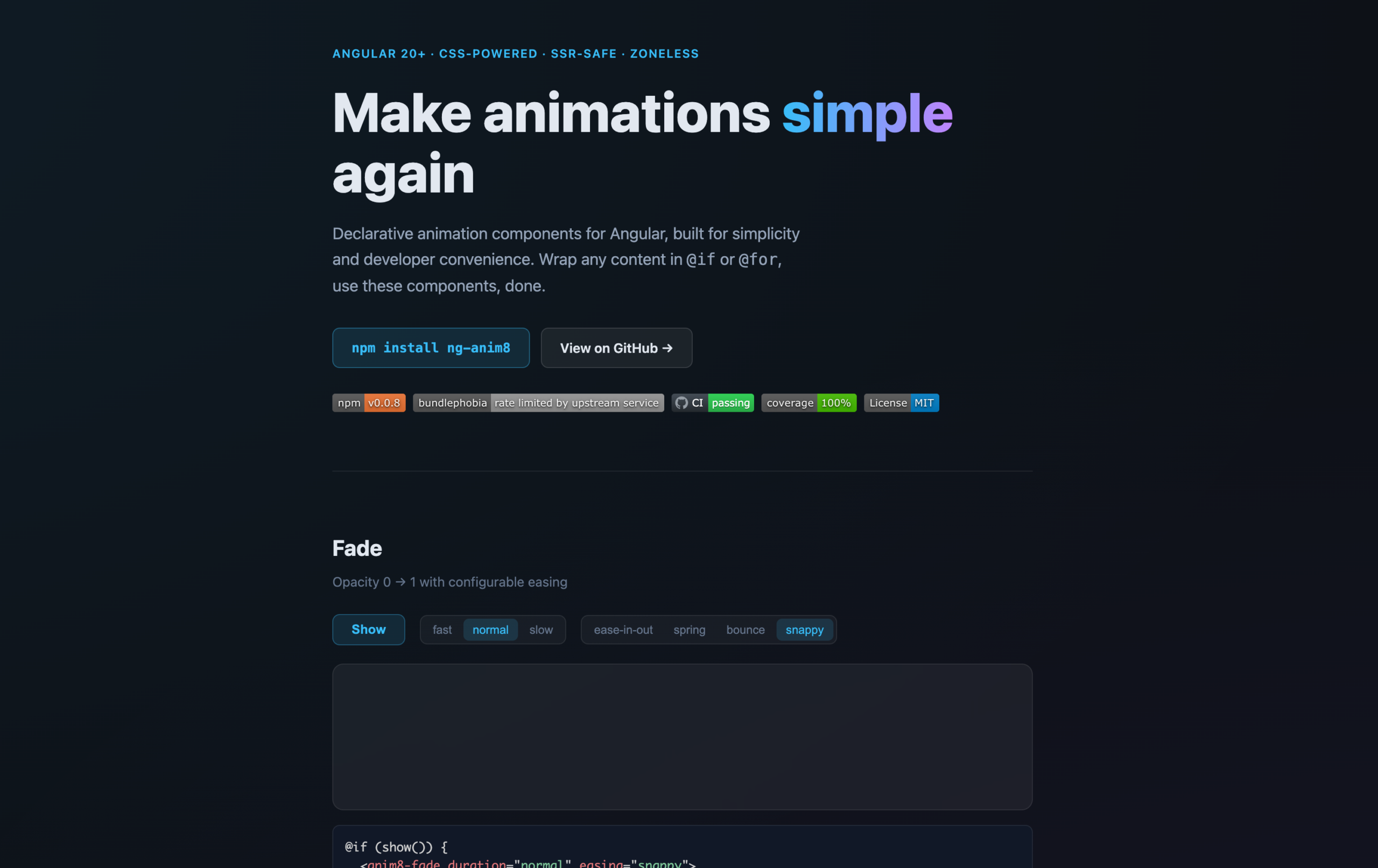
Introducing ng-anim8: My Angular Animation Utility Library
Modern Angular applications often need small, polished transitions: a panel should collapse smoothly, a modal should fade in, an error badge should shake once, or a sidebar should slide into view. These are not complex animation systems. They are everyday UI details that make an interface feel more responsive and easier to understand. That is the reason I built ng-anim8: a small Angular animation utility library that provides declarative animation components and an attention directive for common UI motion patterns. ng-anim8 is designed for Angular 20+, works without @angular/animations,
Top Agentic AI Tools & Generative Platforms for Workflow Orchestration
agentic AI tools are moving from prototypes into enterprise workflows. SMEs can now use agents, orchestration layers, and generative AI to automate multi-step work. This article gives practical guidance. It lists vendor types. It explains selection criteria. It also shows pilot ideas and ROI measures. What agentic AI and workflow orchestration mean Agentic systems combine language models, decision logic, and tool use. They act as goal-driven agents. They orchestrate API calls, data lookups, and human handoffs. Workflow orchestration coordinates those steps. It ensures tasks run in sequence. It manages branching
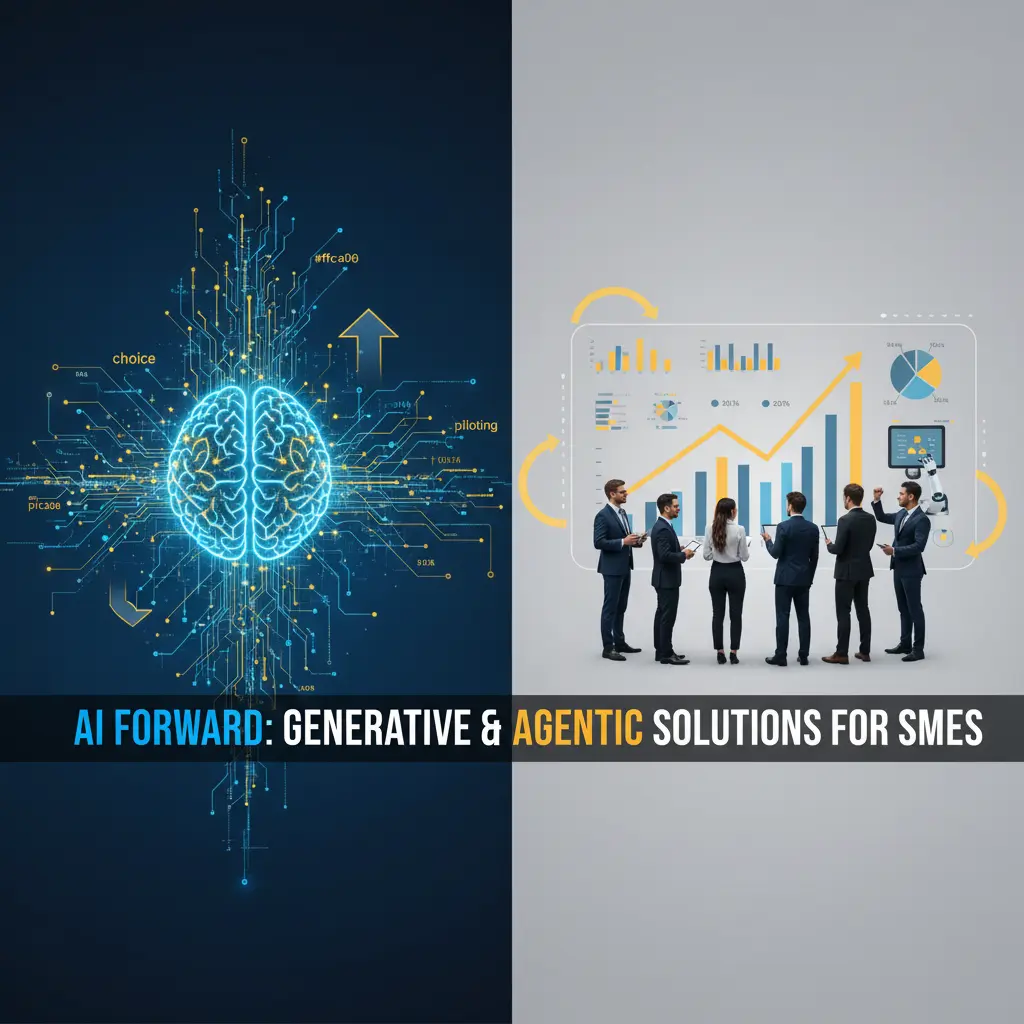
Generative AI vs Agentic AI: Practical Guide for SMEs to Choose, Pilot, Scale
This briefing compares agentic AI vs generative AI for small and medium-sized enterprises. It explains core technical differences and operational trade-offs. You will get clear pilot criteria, typical use-cases, governance steps, and an AI pilot checklist. The goal is simple. Help SMEs capture value quickly while limiting risk. agentic AI vs generative AI: quick comparison Generative AI produces content in response to prompts. It creates text, images, code, and summaries. Agentic AI, by contrast, plans and executes multi-step tasks. It can call tools, maintain state, and follow a goal. In

Measuring the Generative AI ROI in 2026: Practical Guide for SMEs
Generative AI ROI is now a business imperative for small and medium-sized enterprises. Recent industry reports show a shift from experimentation to measurable returns. Early adopters report clear efficiency and revenue gains when projects focus on narrow use cases. This guide explains why ROI matters in 2026. It lists the metrics to track. It gives a practical, action-first framework for SMEs to get measurable results fast. Why generative AI ROI matters for SMEs SMEs face tight budgets. They also need fast, visible impact. Generative AI can scale routine tasks. It

Agentic AI for SMEs: Practical Use‑Cases, Readiness Checklist and Risks
Agentic AI is transforming how small and medium-sized enterprises automate goal-driven work. This briefing explains what agentic AI means. It summarizes practical SME use cases. It provides a short readiness checklist and clear governance steps. The goal is to help stakeholders decide where to pilot, how to measure success, and how to manage risk. Why agentic AI matters for SMEs Agentic AI refers to autonomous, goal-oriented AI agents. They plan and execute multi-step workflows. They automate tasks that previously needed human coordination. For SMEs, agent-based automation offers faster response times,

OpenAI Acquires TBPN — Why AI Firms Are Buying Media
OpenAI podcast acquisition announced on April 2, 2026. The deal shows a new phase where AI companies buy owned media. It places product updates and developer guidance on channels they control. For SMEs, the move changes partnership and PR dynamics. This article explains what happened. It also explores strategic motives, risks, and practical steps for small and medium businesses. What the TBPN acquisition means OpenAI acquired TBPN, a high-reach tech talk show. The hosts and brand remain in place. The report says TBPN will retain editorial protections while scaling under

New IFR Position Paper: How AI Is Reshaping Robotics in 2026
The International Federation of Robotics (IFR) released a major position paper in early 2026. It explains how advances in AI are accelerating robotic capabilities. The phrase "AI in robotics" drives this shift. The paper highlights multimodal models, on-device inference, and improved perception. It also outlines opportunities, technical enablers, and policy priorities for faster, distributed robot deployments. AI in robotics: IFR overview The IFR frames AI as a core enabler for modern robotics. The paper describes physical AI, where models interact directly with the real world. It notes three immediate effects.
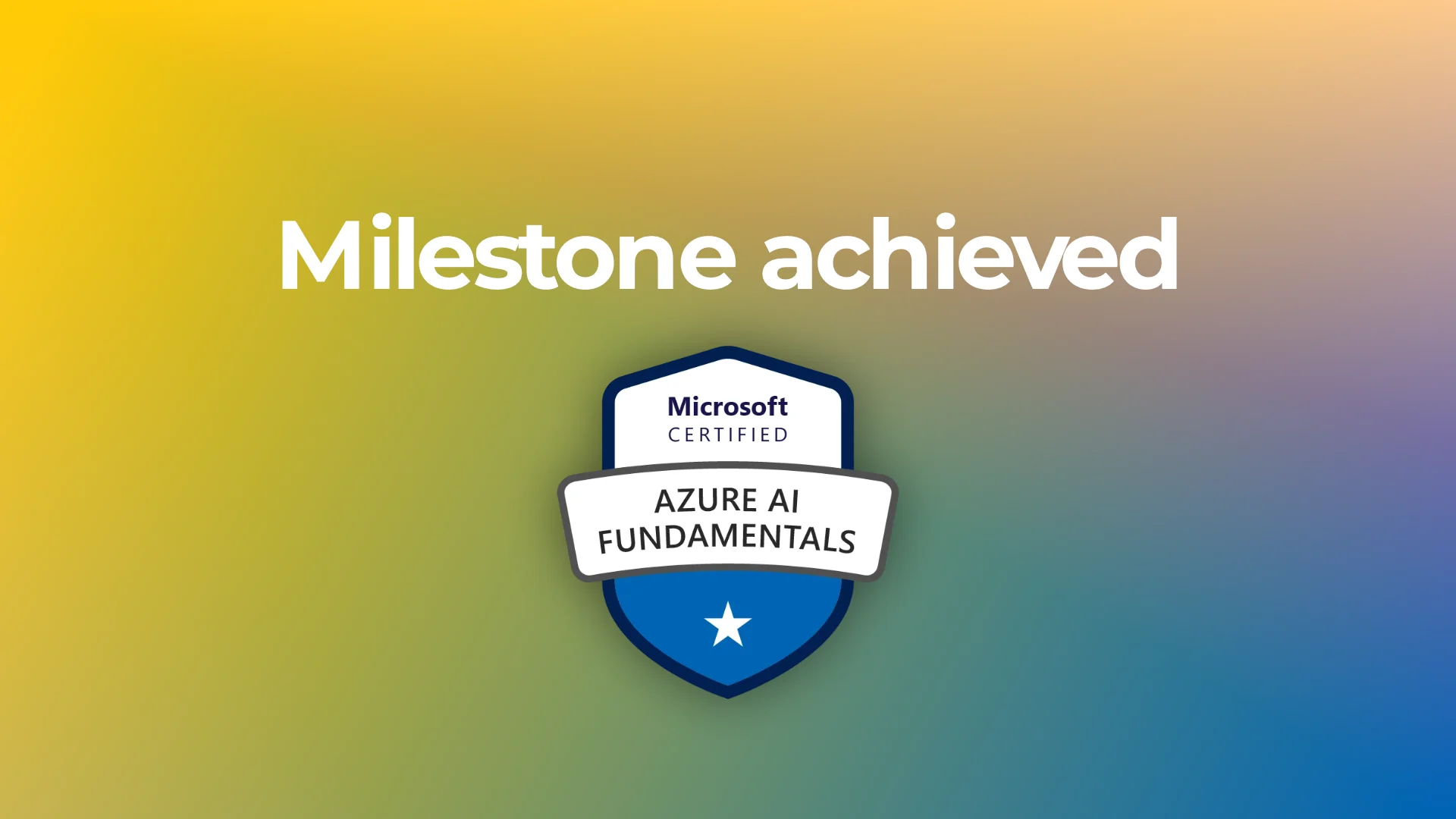
New Certification: Microsoft Azure AI-900
I’m pleased to share that I’ve successfully earned the Microsoft Azure AI-900 (Azure AI Fundamentals) certification. This certification validates a solid understanding of core artificial intelligence concepts and their practical application within the Microsoft Azure ecosystem. It covers a broad range of topics, including machine learning fundamentals, computer vision, natural language processing (NLP), and conversational AI. In addition, it provides insight into responsible AI principles and how to design and deploy AI-driven solutions in a scalable and reliable cloud environment. Preparing for the AI-900 exam offered a valuable opportunity to
Didn’t find what you were looking for?
Use the search function to find other posts. If you have an idea about a new article you want to write me about, do not hesitate to contact me.
Recent Comments