How Google AI Tools Are Disrupting Online News — What Publishers Need to Know
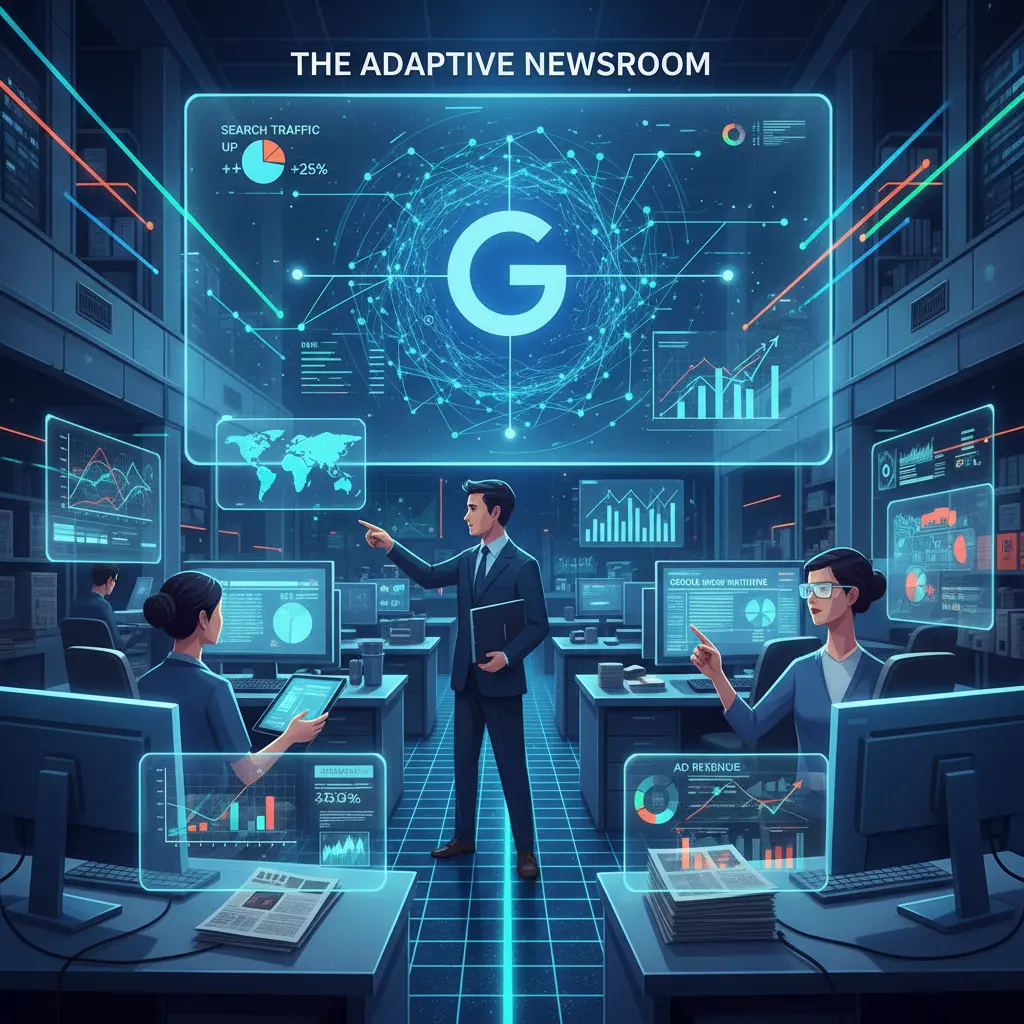
Google AI tools are changing how users find news. New AI-powered search features now synthesize answers. As a result, fewer users click through to original articles. This shift reduces referral traffic and ad revenue for many news publishers. It also forces businesses to rethink SEO strategy and content attribution.
What changed: Google’s AI-driven search in 2026
In early 2026, Google expanded AI Overviews and AI Mode across Search. These features use generative AI to synthesize content from multiple sources. They answer informational queries directly in results. Therefore, users often get the answer without visiting a site. Google framed these updates in its official announcement. Read Google’s January 2026 AI updates for details: Google’s January 2026 AI updates.
Tech reporting shows early behavioral impacts. Searchers click less on organic links for informational queries. They favor short, synthesized answers that appear above links. For analysis of feature rollouts and early effects, see TechCrunch’s coverage of Gemini capabilities: TechCrunch on Gemini and Trends Explore.
Why this matters to news publishers
News publishers rely on search traffic for readership and ad revenue. Now, AI Overviews reduce search-driven referrals. Fewer referrals mean fewer pageviews. That lowers programmatic ad impressions. In turn, ad revenue declines. Smaller publishers feel this faster. They have less brand recognition. Large brands gain an advantage because AI often cites authoritative or widely linked outlets.
Moreover, AI-driven search emphasizes entity signals. Google’s models prefer verified entities and clear provenance. Publishers that lack strong brand signals may see their content omitted from synthesized answers. This reinforces winner-take-most dynamics in digital news.
How businesses and brands are affected
Brands and SMEs also see changes in visibility. Informational content may no longer drive organic traffic. That reduces low-funnel lead capture from content marketing. Search traffic that once fed conversions now stays on Google. Therefore, marketing teams must reassess content ROI. They must also adapt paid strategies to compensate for lost organic referrals.
Additionally, AI-driven answers increase the need for transparent sourcing. When Google synthesizes multiple sources, proper content attribution matters. Brands must ensure accurate citations and clear provenance. This protects brand trust when content appears inside AI summaries.
Immediate mitigation strategies for publishers
Publishers should pursue multiple, complementary tactics. No single solution will fully restore lost search traffic. Combine these steps for best results.
- Build direct audience relationships. Prioritize email newsletters, mobile apps, and membership programs. Direct channels transfer value away from search dependencies.
- Implement stronger content tiers. Use value-based paywalls for exclusive reporting. Offer sample content for discovery. Paid subscribers create stable revenue.
- Improve provenance signals. Use clear bylines, author bios, and publication stamps. Structured author and publisher data helps AI systems identify sources.
- Adopt robust structured data. Implement schema.org markup for articles, authors, and organizations. Use Google’s guidance on structured data to increase clarity: Google Search Central structured data guide.
- Prioritize original reporting and unique formats. Invest in investigations, interviews, and data journalism. Unique content reduces replacement risk from synthesized answers.
- Optimize for entity-first SEO. Focus on building authoritative entity pages. Maintain consistent citations and authoritative references across content.
Immediate mitigation strategies for businesses and marketers
Start with your SEO strategy. Then update content workflows. Finally, adapt advertising plans.
- Reassess content goals. Map which pages must drive traffic. Keep high-intent pages optimized for conversions. Shift purely informational pages toward value capture (lead magnets, CTAs).
- Emphasize brand and authority. Use author credentials and company credentials across content. AI systems tend to cite recognized brands.
- Use paid search and discovery. Allocate budget to capture demand inside the AI-first ecosystem. Consider Performance Max or similar campaigns to regain visibility.
- Disclose sources and methodology. When content may be synthesized, include explicit attribution and clear method notes. This builds credibility when Google draws on your content.
- Track new metrics. Monitor discovery impressions, AI-overview citations, and direct conversions. Don’t rely only on traditional organic clicks.
Technical and editorial tactics to protect value
Technical signals help AI systems locate and attribute your content. Editorial choices affect whether your content is cited.
- Structured data — Use article, author, and organization schema. Include sameAs links to verified social profiles. Use timestamps and canonical tags.
- Provenance and attribution — Add clear sourcing lines and primary-source links. Use descriptive captions for images and data visualizations.
- Content packaging — Offer short summaries plus in-depth reads. Provide plain-language TL;DRs at the top. This encourages Google to surface links when users need deeper context.
- Multimodal assets — Add high-quality images, charts, and short videos. AI-driven search increasingly uses multimodal results. Optimize alt text and captions for each asset.
- Authenticated experiences — Encourage readers to sign in for exclusive elements. Logged-in experiences let you capture first-party data.
Monetization and advertising adjustments
Publishers should diversify revenue. Rely less on programmatic display alone. Consider subscriptions, sponsorships, and events. Use audience-first ad products and direct-sold sponsorships. These yield predictable revenue.
Digital advertising teams must adapt measurement. AI-driven answers can alter last-click attribution. Move toward multi-touch and lift-based measurement. Test new placements and creative formats that work inside Google’s ecosystem.
How to measure impact and iterate
Set short-term and long-term KPIs. Short-term KPIs measure referral traffic and impressions. Long-term KPIs measure subscriptions, direct revenue, and audience retention.
- Track changes in search click-through rate and impressions.
- Monitor how often your domain is cited in AI Overviews.
- Measure newsletter sign-ups and app installs tied to search discovery.
- Run ang experiments on paywall offsets and conversion funnels.
Finally, update editorial planning to prioritize durable content. Evergreen analysis and exclusive reporting hold value beyond transient search trends.
Conclusion: practical next steps
Google AI tools reshape how users consume news. The result is less referral traffic for many publishers. Businesses lose some organic demand for informational queries. However, publishers and brands can act now. Build direct relationships with audiences. Strengthen provenance and structured data. Diversify monetization beyond programmatic ads. Reassess SEO strategy for entity and intent signals. Test paid channels to recover visibility.
Change is rapid. But clear actions can mitigate the impact. For publishers and SME marketers, the priority is simple. Protect first-party relationships. Prove unique value. And adapt measurement to an AI-first search world.